 By Muhammad Abdullah
Are Private Chats Really Private? The Hidden Reality
Introduction: The Illusion of Online Privacy
In today’s digital world, billions of people rely on messaging apps to communicate with friends, family, and coworkers. These platforms often promise “private” and “secure” conversations, giving users a strong sense of safety. However, the reality is more complex. While modern technology offers advanced encryption and security tools, true privacy is not always guaranteed. Many users unknowingly share personal data, metadata, and behavioral information that can be collected, stored, or accessed in various ways. This creates an illusion of complete privacy chat one that may not fully reflect how online communication actually works.
What Does “Private Chat” Actually Mean?
A “private chat” is commonly understood as a conversation that only the sender and receiver can read. In most messaging apps, this means messages are protected using encryption so outsiders cannot easily intercept them. However, privacy does not always mean complete secrecy. Some apps label chats as private even though messages may be stored on their servers, backed up to the cloud, or accessible under certain conditions. True private chat usually refers to end-to-end encryption, where only the participants hold the keys to decrypt messages. Understanding this difference is essential, because not every chat marked as “private” offers the same level of protection.
How Messaging Apps Protect Your Messages
Messaging apps use multiple security measures to protect your messages from being intercepted, read, or tampered with. One of the main tools is encryption, which converts your messages into a coded format that only the recipient can decode. Many apps, like Signal, WhatsApp, and Telegram, use end-to-end encryption, meaning messages are encrypted on your device and can only be decrypted by the receiver’s device. In addition, some apps offer secure servers, two-factor authentication, and self-destructing messages to enhance privacy.
End-to-End Encryption Explained Simply
End-to-end encryption (E2EE) is one of the most important security features in modern messaging apps. It ensures that only the sender and recipient can read the messages, making it nearly impossible for hackers, app providers, or third parties to access your private conversations. When you send a message, it is encrypted on your device and can only be decrypted on the recipient’s device using a unique encryption key.
What Data Apps Can Still See
Even in apps with end-to-end encryption, messaging platforms can still collect certain types of data. This often includes metadata such as who you message, the time and date of messages, device information, and IP addresses. Some apps may also store cloud backups, which can be accessed under specific conditions. Understanding what data apps can see is crucial for anyone who wants to protect their online privacy.
Metadata: The Invisible Information You Share
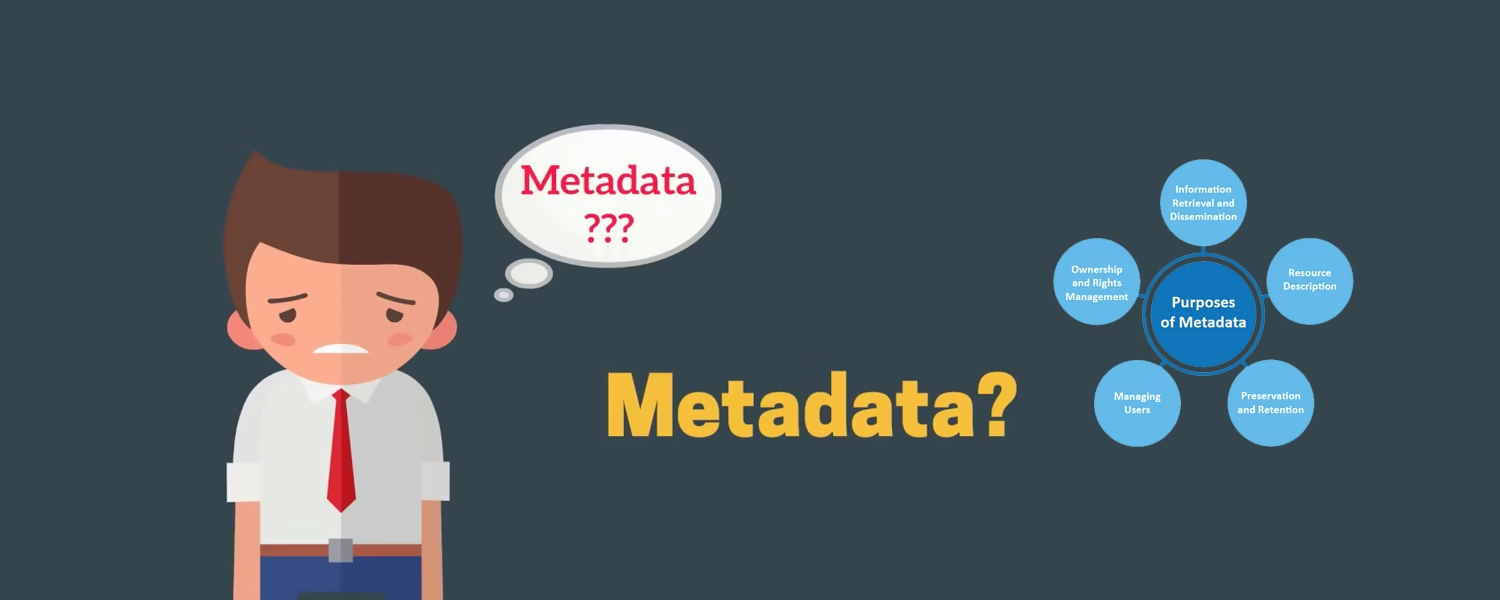
Metadata is the hidden information that surrounds your messages, even in apps with strong end-to-end encryption. This includes details like who you communicate with, message timestamps, your device type, and location data. While your actual messages remain private, metadata can reveal patterns about your behavior and contacts, making it a valuable target for advertisers, hackers, or government agencies.
Cloud Backups and Privacy Risks
Many messaging apps offer cloud backup features to help users save and restore their chat history. While convenient, these backups can pose significant privacy risks. Unlike messages protected by end-to-end encryption, cloud backups are often stored on company servers and may not be fully encrypted. Users who want to keep chats private online should be aware of these risks and consider disabling cloud backups or using apps that offer encrypted backups.
Who Has Access to Your Messages?
Even in supposedly private chats, understanding who can access your messages is crucial for online privacy. With end-to-end encryption, only the sender and receiver can read the content of messages. However, some apps may still have limited access through cloud backups, server storage, or legal requests. Hackers can also gain access if devices are compromised. Choosing apps with strong encryption, minimal data storage, and transparent privacy policies is essential to prevent unauthorized access.
Can Hackers Read Private Chats?
Hackers are constantly looking for ways to break into messaging accounts, but reading private chats is not easy when strong security is in place. Apps that use end-to-end encryption protect messages so that even if data is intercepted, it cannot be read without the encryption key. However, hackers can still access private chats through phishing attacks, malware, weak passwords, or compromised devices.
Government Requests and Surveillance
Governments can request access to user data or metadata from messaging apps, especially if messages are stored on company servers or cloud backups. End-to-end encrypted messages, however, remain private and cannot be read by governments. Being aware of the legal jurisdiction of your messaging app helps you understand potential privacy risks.
The Role of App Permissions
App permissions play a crucial role in your online privacy and the security of your messages. When you install a messaging app, it may request access to contacts, storage, microphone, camera, and location. Granting these permissions can make the app function better, but it can also expose sensitive personal data if misused. Reviewing and limiting app permissions is essential to protect your personal information.
User Mistakes That Compromise Privacy
Even with the most secure messaging apps, user mistakes can put your privacy at risk. Common errors include sharing sensitive information over unencrypted chats, using weak passwords, ignoring app updates, or falling for phishing scams. Many users also accidentally grant unnecessary app permissions or store backups without encryption. Practicing good digital hygiene is essential for keeping your private chats secure.
How to Make Your Chats More Secure
Keeping your messages private requires more than just using a secure app—it also depends on your digital habits. Enable two-factor authentication (2FA), update apps regularly, avoid unencrypted backups, and choose apps with strong end-to-end encryption. Being proactive about security is the best way to protect your digital conversations.
Best Apps for Truly Private Messaging
The top apps for truly private messaging include Signal, WhatsApp (for encrypted chats), and Telegram’s Secret Chats. Signal is fully open-source, collects minimal data, and is widely trusted. WhatsApp offers strong encryption but stores some metadata, while Telegram provides secret chats for end-to-end encryption. Choosing the right app is the first step toward keeping your chats secure.
Future of Private Communication
Messaging apps are now focusing on stronger end-to-end encryption, metadata minimization, and secure cloud backups. Innovations like decentralized messaging networks and zero-knowledge servers are emerging to give users greater control over data. Staying informed about new privacy technologies is key to protecting your conversations in the future.
Conclusion: How Private Are Your Chats Really?
While messaging apps promise private conversations, true privacy depends on both the app and user behavior. End-to-end encryption protects messages, but metadata, backups, permissions, and mistakes can compromise security. Apps like Signal, WhatsApp, and Telegram offer strong protection, but users must also follow good digital practices to stay safe. Private chats are only as secure as the combination of technology and user habits allows.
You Can Also Read: Google Reports Over 1 Billion RCS Messages Sent Daily in the U.S.
(FAQs)
1. Are private chats really private?
Private chats are fully private only with end-to-end encryption, but metadata and backups can still compromise privacy.
2. Which messaging app is the most secure?
Signal is the most secure app due to open-source code, strong encryption, and minimal data collection.
3. Can hackers read private chats?
Hackers can exploit weak passwords, malware, or phishing, but cannot read end-to-end encrypted messages directly.
4. Does Telegram or Signal keep my messages?
Signal does not store messages. Telegram stores messages on cloud servers but offers Secret Chats for encryption.
5. What data do messaging apps collect?
Apps may collect metadata like contacts, timestamps, and device info, even if messages are encrypted.
6. How can I make my chats more secure?
Enable 2FA, update apps, review permissions, and use apps with end-to-end encryption.
7. Are cloud backups safe for private chats?
Cloud backups can be risky unless encrypted. Use apps with encrypted backups or disable cloud storage.
8. Can governments access my private messages?
Governments can request metadata or backups, but end-to-end encrypted messages cannot be read by anyone else.
9. What is metadata in messaging apps?
Metadata includes who you communicate with, timestamps, and location—it can reveal patterns even if messages are encrypted.
10. How can I check if my messaging app is truly secure?
Look for apps that are open-source, independently audited, end-to-end encrypted, and collect minimal data.